
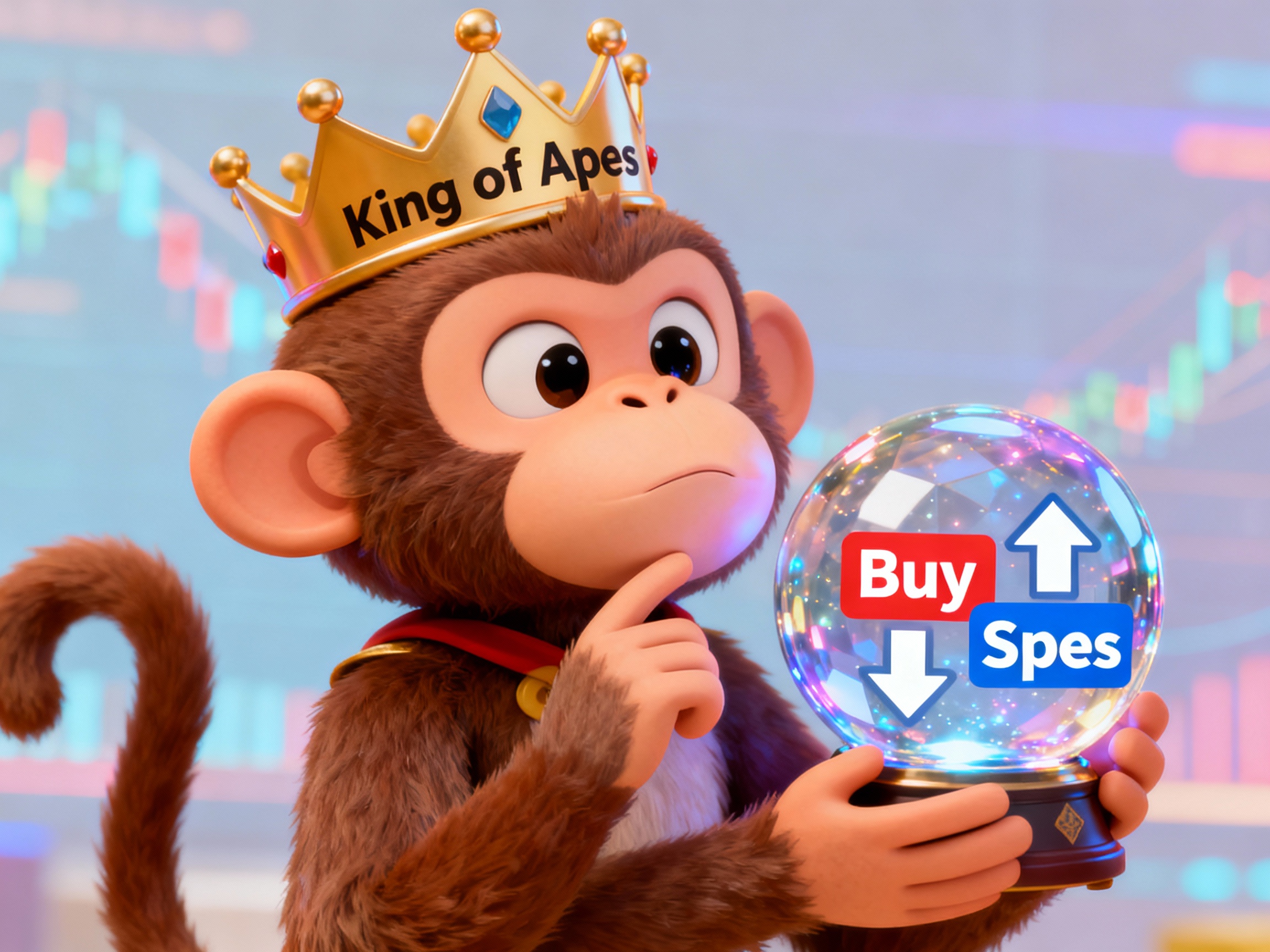
The “King of Apes” ranking represents Ape.Store’s highest curation status—projects that have passed multiple quality filters, demonstrated genuine community engagement, achieved sustainability metrics, and earned recognition within the ecosystem. Yet many traders misinterpret what “King of Apes” actually signals. Some assume it’s a “buy signal” (ranking validates project, price will moon). Others assume it’s a “sell signal” (project peaked, recognition means upside exhausted). Neither interpretation is correct. This guide examines what “King of Apes” actually measures, how to interpret the signal correctly, explains the relationship between curation and price discovery, and teaches traders to use rankings as a research starting point—not investment conclusion. Understanding ranking signals separates informed traders from those following mechanical rules.
Understanding Ape.Store’s Ranking System
What Is King of Apes?
King of Apes is Ape.Store’s elite ranking for projects demonstrating:
textRanking criteria (estimated, based on platform design):
├─ Community engagement: High Farcaster activity, substantive discussions
├─ Holder distribution: Diversified ownership (not whale-concentrated)
├─ Creator legitimacy: Verified identity, ongoing participation
├─ Project differentiation: Unique concept, not generic clone
├─ Sustainability metrics: Consistent activity over time (not just launch spike)
├─ Tokenomics quality: Sustainable incentive structure, no obvious exploits
├─ Social sentiment: Community positive, minimal scam accusations
└─ Longevity: Project maintained momentum post-launch (weeks/months active)
Result: Projects meeting most criteria earn “King of Apes” status.
What King of Apes Does NOT Measure
Critical distinction:
textKing of Apes measures: Project quality, community health, sustainability
King of Apes does NOT measure: Price potential, return probability, investment quality

Common misunderstanding:
"King of Apes = Good Investment" ❌
Correct interpretation:
"King of Apes = Good Project, But Quality ≠ Price Appreciation"
Why distinction matters:
textHigh-quality projects can:
├─ Fail to gain market adoption (quality doesn't guarantee demand)
├─ Face market headwinds (quality can't overcome bear markets)
├─ Experience price collapse (quality doesn't prevent exits)
├─ Sustain long-term without price gains (quality ≠ profitability)

Examples:
├─ Project: "Excellent community, sustainable model, high quality"
├─ Outcome: Stable at $100k market cap for 6 months (no 100x)
├─ Trader expectation: "This should moon!" (quality doesn't guarantee moon)
├─ Reality: Quality project, zero speculative gains
The Signal Interpretation Problem
The “Buy Signal” Misinterpretation
How traders wrongly interpret King of Apes:
textTrader logic:
1. "King of Apes = Best project on platform"
2. "Best project = Should perform best"
3. "Should perform best = Price will moon"
4. "Therefore: King of Apes = Buy signal"

Result: Trader buys King of Apes projects expecting 100x returns

Reality:
1. King of Apes = Quality metrics high (true)
2. High quality = Sustainable (true)
3. Sustainable ≠ High return (FALSE)
4. Price driven by market dynamics, not quality (independent)

Outcome: Disappointed traders (quality ≠ returns)
Why this interpretation fails:
textMarket dynamics independent from quality:
├─ Supply-demand: Quality doesn't create demand
├─ Speculation cycles: Quality can't prevent bear markets
├─ Hype timing: Quality projects can miss FOMO waves
├─ Competition: Multiple quality projects = diluted attention
└─ Result: Quality doesn't determine price
The “Sell Signal” Misinterpretation
How other traders wrongly interpret King of Apes:
textTrader logic:
1. "Project earned King of Apes (recognition complete)"
2. "Recognition = Peak status achieved"
3. "Peak status = Price likely to decline from here"
4. "Therefore: King of Apes = Sell signal (take profits)"

Result: Trader exits King of Apes projects expecting immediate decline

Reality:
1. King of Apes = Curation recognition (true)
2. Recognition ≠ Price peak (recognition happens late in curve)
3. But recognition also ≠ Guaranteed decline
4. Price continues based on ongoing fundamentals (not just recognition)

Outcome: Trader exits winners prematurely (missed further upside)
Why this interpretation also fails:
textKing of Apes projects that continued growing:
├─ Project A: Earned ranking at $500k cap, grew to $5M (10x after ranking)
├─ Project B: Earned ranking at $2M cap, grew to $20M (10x after ranking)
├─ Project C: Earned ranking at $100k cap, grew to $1M (10x after ranking)

Result: Selling at recognition = Selling too early
        King of Apes not peak signal; often midpoint signal
What King of Apes Actually Signals
Signal 1: Quality Validation (Not Price Prediction)
What it means:
textKing of Apes validates:
├─ ✅ Project quality is above-average (among memecoin ecosystem)
├─ ✅ Community is genuine and engaged
├─ ✅ Creator is legitimate and visible
├─ ✅ Tokenomics are sustainable (not obviously extractive)
├─ ✅ Project differentiates from competitors

What it does NOT validate:
├─ ❌ Price will increase (quality ≠ price appreciation)
├─ ❌ Project will succeed long-term (quality is necessary, not sufficient)
├─ ❌ Returns will be positive (market dynamics independent)
├─ ❌ Token won't collapse (any project can fail)
└─ ❌ Current price is fair (valuation separate from quality)
Signal 2: Risk Reduction (Not Risk Elimination)
What it means:
textKing of Apes reduces:
├─ Honeypot risk (scanning catches obvious scams)
├─ Rug pull risk (LP burn verified, contracts reviewed)
├─ Scam risk (team verification reduces anonymous fraud)
├─ Manipulation risk (holder distribution flags whale dumps)
└─ Result: ~10-20% failure rate (vs ~98% for average memecoin)

What it does NOT reduce:
├─ Market risk (no protection from bear markets)
├─ Adoption risk (quality doesn't guarantee users come)
├─ Timing risk (even quality projects can launch before market ready)
├─ Competition risk (better competitors can still displace)
└─ Result: Still 10-20% failure rate (not risk-free)
Quantified perspective:
textAverage memecoin failure rate: 98.6%
King of Apes failure rate: ~15-20% (estimated)

Improvement: Dramatic (5x lower failure rate)
But result: Still 1-in-5 to 1-in-7 projects fail

This is not "safe investment." This is "less risky speculation."
Signal 3: Sustainability Proof (Not Growth Guarantee)
What it means:
textKing of Apes proves:
├─ Project survived post-launch (not abandoned after hype)
├─ Creator engaged (still participating, communicating)
├─ Community active (real people discussing, not bot noise)
├─ Metrics sustaining (not collapsing in weeks)
└─ Result: Can exist for months/years (vs weeks for typical memecoin)

What it does NOT prove:
├─ Project will grow (sustainability ≠ growth)
├─ Project will moon (can sustain at current level indefinitely)
├─ Project will be profitable (can sustain unprofitably)
├─ Opportunity will open (sustained doesn't equal exciting)
└─ Result: Boring but stable (not thrilling but reliable)
Real-world outcome spectrum:
textKing of Apes project A: Sustained $500k market cap for 12 months
└─ Outcome: Successful from sustainability view (failed from returns view)

King of Apes project B: Grew from $500k to $5M over 6 months
└─ Outcome: Successful from both views (quality + growth)

King of Apes project C: Declined from $500k to $100k over 6 months
└─ Outcome: Still maintained quality (but price failed)

All three are "legitimate King of Apes projects"
But returns vary from -80% to +1000%
Quality doesn't predict outcome distribution
Using King of Apes as Research Starting Point (Correct Approach)
Framework: King of Apes as Filter, Not Signal
Correct interpretation:
textKing of Apes ranking = "This project passed initial quality screening"
Next step = "Now evaluate if this particular project fits my thesis"

Workflow:
1. Filter projects: Look at King of Apes list (removes 95% of scams)
2. Research each: Do independent due diligence on filtered projects
3. Evaluate: Does project align with your investment thesis?
4. Decide: Does upside potential justify downside risk?
5. Position: Size your investment accordingly

Result: King of Apes reduces research burden (fewer scams to filter)
        But doesn't replace research (still need independent evaluation)
How to Evaluate King of Apes Projects
Step 1: Understand Why It Earned Ranking
textQuestion: What specific metrics earned King of Apes status?
Answer sources:
├─ Ape.Store platform metrics (if visible)
├─ Community engagement (check Farcaster/Discord activity)
├─ Holder distribution (check on-chain)
├─ Creator biography (verify identity, track record)
└─ Tokenomics breakdown (understand incentive structure)

Outcome: Deep understanding of project's strengths
Step 2: Identify Weaknesses Despite Ranking
textQuestion: What risks remain despite King of Apes status?
Research points:
├─ Market competition: What alternatives exist?
├─ Adoption progress: Are users actually using it?
├─ Runway: How long can project sustain without more capital?
├─ Execution: Can team deliver roadmap promises?
└─ Timing: Is market receptive to this concept now?

Outcome: Risk identification (what could go wrong)
Step 3: Evaluate Price vs Quality
textQuestion: Is current price justified by quality?
Valuation framework:
├─ Peer comparison: Similar quality projects trading at what prices?
├─ Market cap relative to engagement: Low engagement = overvalued
├─ Early/late stage: Early stage = higher risk, higher potential return
├─ Time since launch: Older projects = more predictable, lower returns
└─ Comparison benchmark: Higher/lower than comparable projects?

Outcome: Valuation assessment (is price fair?)
Step 4: Determine Your Investment Thesis
textQuestion: Why would YOU invest in this particular project?
Decision points:
├─ Growth thesis: "Project will gain adoption and grow" (speculative)
├─ Sustainability thesis: "Project will sustain at current level" (stable)
├─ Defensive thesis: "Project will decline slower than market" (hedge)
├─ Gambling thesis: "I don't know, but odds better than average" (speculation)

Outcome: Clear thesis (not just "King of Apes so must buy")
Real Example: Evaluating King of Apes Project
Case Study: “CommunityToken”
textFacts:
├─ Status: Recently earned King of Apes
├─ Market cap: $2M
├─ Launch: 4 months ago
├─ Community: 5,000 active members (Farcaster)
├─ Creator: Verified, visible, regularly communicating
├─ Roadmap: Clear, achieving milestones

Trader A approach (wrong):
"King of Apes = Buy signal, price will moon"
Action: FOMO buys at $2M market cap
Expectation: 100x returns
Reality: Market cap stabilizes at $2-3M for 6 months
Result: 0-50% returns (disappointed)

Trader B approach (wrong):
"King of Apes = Peak reached, sell signal"
Action: Avoids project entirely
Expectation: Project peaks, price declines
Reality: Market cap grows to $8M over next 6 months
Result: Missed 4x opportunity (sold before opportunity)

Trader C approach (correct):
"King of Apes = Quality validated, now evaluate"
Research:
├─ Why ranked? Community engagement genuine, creator legit
├─ Weaknesses? Adoption still slow, unproven monetization
├─ Valuation? $2M comparable to peers (fair for quality level)
├─ Thesis? "Growth potential if adoption accelerates"
Action: Position size: 2-3% of portfolio (high-risk allocation)
Entry: $2M market cap (reasonable entry given thesis)
Outcome: Grows to $8M over 6 months, realizes 4x
Result: Successful allocation (thesis validated)
King of Apes in Different Market Conditions
Bull Market: King of Apes Advantage Magnified
Market conditions:
textEnvironment: Rising tide (all tokens appreciating)
Market cap growth: General upward trend
FOMO presence: Strong (retail seeking opportunities)
Adoption pace: Accelerating (new users entering market)
How King of Apes performs:
textKing of Apes projects: Often outperform (quality attracts capital during strength)
Average projects: Also rise (tide lifts all boats)
Low-quality projects: Underperform (but still profitable)

Result: King of Apes projects often see 2-5x in bull markets
Reason: Quality attracts capital, capital drives price
Bear Market: King of Apes Defensive Value
Market conditions:
textEnvironment: Falling tide (all tokens depreciating)
Market cap shrinking: General downward trend
FOMO absent: Fear present (retail exiting)
Adoption stalled: Slowing (new users rare)
How King of Apes performs:
textKing of Apes projects: Decline slower (quality holds value better)
Average projects: Collapse rapidly (low confidence, mass exits)
Low-quality projects: Die completely (90%+ losses)

Result: King of Apes projects often see -30-50% in bear markets
Average projects: Often see -80-95% in bear markets
Low-quality: Often see -95-99% in bear markets
Implication:
textBull market: King of Apes = Leverage (amplifies upside)
Bear market: King of Apes = Insurance (dampens downside)

Result: King of Apes projects exhibit lower volatility + lower downside
But: Also lower upside in bear markets (paradoxical)
The Research Connection: King of Apes as Research Foundation
As detailed in From Explorer to Token Page: How to Research Safely, proper due diligence requires multiple research steps:
King of Apes automates some early steps:
textResearch step 1: Verify contract legitimacy
├─ Manual approach: Check Basescan, review code, scan for honeypots
├─ King of Apes approach: Already verified by curation
└─ Time saved: 10-15 minutes

Research step 2: Analyze holder distribution
├─ Manual approach: Check top holders, calculate concentration
├─ King of Apes approach: Already analyzed (must pass threshold)
└─ Time saved: 5-10 minutes

Research step 3: Evaluate liquidity
├─ Manual approach: Verify liquidity locked, calculate ratio
├─ King of Apes approach: Already verified (must meet standards)
└─ Time saved: 5 minutes

Research steps NOT automated:
├─ Step 4: Evaluate community sentiment independently
├─ Step 5: Research team background and track record
├─ Step 6: Assess market adoption and competitive position
└─ Step 7: Determine if valuation justified for YOUR thesis
Result: King of Apes eliminates 30-40 minutes of basic due diligence, freeing time for deeper analysis.
The Price Discovery Question: When Should You Buy?
Timing Relative to King of Apes Ranking
Three scenarios:
Scenario 1: Buy Before King of Apes Ranking (Early)
textMarket cap at purchase: $300k (pre-ranking)
King of Apes earned: At $1M market cap
Your position when ranked: 3-4x

Advantage: Entry before quality validation
Disadvantage: Higher failure risk (unvetted)
Appropriate for: Aggressive traders, high-risk tolerance

Return potential: 10-100x (if project grows)
Failure potential: -100% (if project fails)
Scenario 2: Buy After King of Apes Ranking (Quality-Validated)
textMarket cap at purchase: $2M (post-ranking)
King of Apes status: Recently earned
Your position when ranked: 1x (already at ranking)

Advantage: Quality validated, lower failure risk
Disadvantage: Some price appreciation already captured
Appropriate for: Moderate traders, medium-risk tolerance

Return potential: 2-20x (if project grows further)
Failure potential: -50% to -80% (higher floor than pre-ranking)
Scenario 3: Buy Long After King of Apes Ranking (Established)
textMarket cap at purchase: $10M (months after ranking)
King of Apes status: Long-established (multiple months)
Your position when ranked: 1x (established position)

Advantage: Project proven (sustained through multiple cycles)
Disadvantage: Limited upside (already established)
Appropriate for: Conservative traders, lower-risk tolerance

Return potential: 1-5x (if project continues growing)
Failure potential: -30% to -50% (lower floor, but also lower upside)
The paradox:
textEarliest entry (pre-ranking) = Highest return potential but highest failure risk
Latest entry (long post-ranking) = Lowest return potential but lowest failure risk

King of Apes timing (mid-range) = Moderate risk, moderate reward balance
FAQ: King of Apes Signal Questions
Q: Should I always buy King of Apes projects?
A: No. King of Apes validates quality, not return potential. Buy only if: (1) You’ve done independent research, (2) Project aligns with your investment thesis, (3) Price seems reasonable for your risk tolerance, (4) You’re sizing position appropriately for high-risk allocation. Quality ≠ automatic buy.
Q: Is King of Apes a buy signal or sell signal?
A: Neither. It’s a quality filter. Quality is independent from price direction. Use it to filter which projects deserve research time, then research independently to determine buy/sell thesis.
Q: Can King of Apes projects fail?
A: Yes, ~15-20% failure rate (much better than 98.6% average, but still substantial risk). King of Apes reduces failure risk dramatically, but doesn’t eliminate it. Diversification still essential.
Q: Should I buy as soon as project earns King of Apes?
A: Not necessarily. Early entry before ranking = higher upside but higher risk. Post-ranking entry = lower upside but lower risk. Choose timing based on your risk tolerance and thesis, not timing relative to ranking.
Q: What if I bought pre-King of Apes, should I sell when it earns ranking?
A: Depends on your thesis. If you bought based on potential, ranking validates thesis (hold). If you bought as speculation and expected pump-and-dump, ranking means sustained project (hold differently). Don’t use ranking as profit-taking trigger unless position oversize.
Q: How much upside typically comes after King of Apes?
A: Highly variable (10-50% to 10x possible, also -50% possible). Depends on: (1) Bull or bear market, (2) Project execution, (3) Competitive landscape, (4) Timing. King of Apes doesn’t predict post-ranking returns.
Q: Is King of Apes better than Pump.fun’s trending?
A: Different purposes. Pump.fun trending = momentum signal (often peaks fast, crashes). King of Apes ranking = quality signal (sustainability indicator). Trending predicts short-term FOMO; ranking predicts long-term viability.
Q: Should I research King of Apes projects differently than others?
A: Some differences. King of Apes projects: (1) Skip some basic checks (already verified), (2) Focus on deeper analysis (community sentiment, adoption potential), (3) Evaluate valuation more carefully (quality might be priced in). Still do full due diligence, but emphasis shifts.
Q: Can a project lose King of Apes status?
A: Possibly (if platform implements status changes). If status changes: Could signal declining engagement or issues. Should trigger re-evaluation of investment. But current Ape.Store doesn’t appear to remove status (would need platform confirmation).
Q: What percentage of King of Apes projects achieve 10x returns?
A: Unknown (no official data). Estimates: ~5-15% reach 10x returns, ~30-40% reach 2-5x returns, ~20-30% maintain value (0.5-1x), ~15-25% decline (-50% or more). Most achieve modest returns, some achieve spectacular, some fail.
Q: Should King of Apes influence my position size?
A: Yes. King of Apes projects = lower risk = can justify larger positions than average memecoin. But still keep as high-risk allocation. Suggested: Average memecoin position 0.5-1% of portfolio, King of Apes position 1-3% of portfolio (higher ceiling due to lower failure risk).
Q: Is King of Apes signal more reliable than team reputation?
A: Different metrics. King of Apes = Quantitative quality metrics. Team reputation = Qualitative track record. Both useful, neither complete. Best: King of Apes filter + team reputation validation = highest confidence.
Conclusion: King of Apes as Research Tool, Not Crystal Ball
The Core Insight
King of Apes is a quality filter, not a price prediction.
textWhat it validates: Project quality is above-average
What it doesn't validate: Price will increase

Use it to: Decide which projects deserve research time
Don't use it to: Make buy/sell decisions automatically
The Correct Mental Model
King of Apes ranking = Necessary condition, not sufficient condition
textNecessary: Must meet quality standards (King of Apes helps verify this)
Sufficient: Must also have market demand, favorable timing, execution luck

Example logic:
"King of Apes project AND strong adoption signals AND bull market momentum"
= High-probability buy opportunity

"King of Apes project BUT weak adoption signals AND bear market"
= Risky buy (quality doesn't overcome other headwinds)

Result: King of Apes is part of decision, not entire decision
The Investment Framework
Use King of Apes strategically:
textStep 1: Start with King of Apes list (quality-filtered projects)
Step 2: Research each independently (don't trust ranking alone)
Step 3: Evaluate your specific investment thesis (why would you invest?)
Step 4: Size position by risk (quality = can take larger position)
Step 5: Monitor position for thesis validation (did assumptions prove correct?)
Step 6: Exit when thesis breaks (regardless of King of Apes status)

Result: King of Apes informs decision but doesn't determine it
The Unintuitive Truth
The best opportunities often come from pre-King of Apes projects.
textPre-ranking: Unknown, risky, high upside potential
Post-ranking: Validated, safer, moderate upside potential

Mathematically:
- Pre-ranking: 50% failure rate, but 20-100x on winners
- Post-ranking: 15% failure rate, but 2-10x on winners

Expected value might favor pre-ranking despite higher failure rate
But: Requires higher risk tolerance and portfolio diversification
When to Ignore King of Apes (When It Matters Most)
King of Apes quality matters less when:
textMarket momentum strong: Even low-quality projects moon in bull markets
Competition fierce: Quality not differentiating if alternatives exist
Adoption stalling: Quality can't overcome lack of user interest
Timing wrong: Perfect project, wrong market moment = failure
Result: King of Apes = insurance against scams/failures, but can’t overcome market dynamics.
Take-home: Use King of Apes as foundation for research, not substitute for research.