
Category: DeFi Mechanics & Advanced Insights
-
Predicting Future Launchpad Trends: What’s Next for Token Launches in 2026 and Beyond
Table of Contents Introduction: The Evolution of Launchpad Markets 2020-2022: IDO launchpads dominated ($100k-$10M raises, weeks-long vetting) 2023-2024: Memecoin platforms emerged (Pump.fun, Ape.Store, 5-minute launches) 2025: Memecoin market cap grew from $20B → $120B (500% growth) 2026+: What happens next? This guide analyzes emerging launchpad trends and predicts what the market will look like in 12-24 months. The core…
-
Meme Tokens as Micro-DAOs: Governance Potential and Community-Driven Decision Making
Table of Contents Introduction: From Memes to Governance When you launch a meme token on Ape.Store, you’re not just creating a speculative asset. You’re creating the infrastructure for a micro-DAO—a small, community-governed organization where: The shift from memecoin → governance token is profound. Historically, meme tokens were pure speculation: “Buy, hope price goes up, exit.” Modern…
-
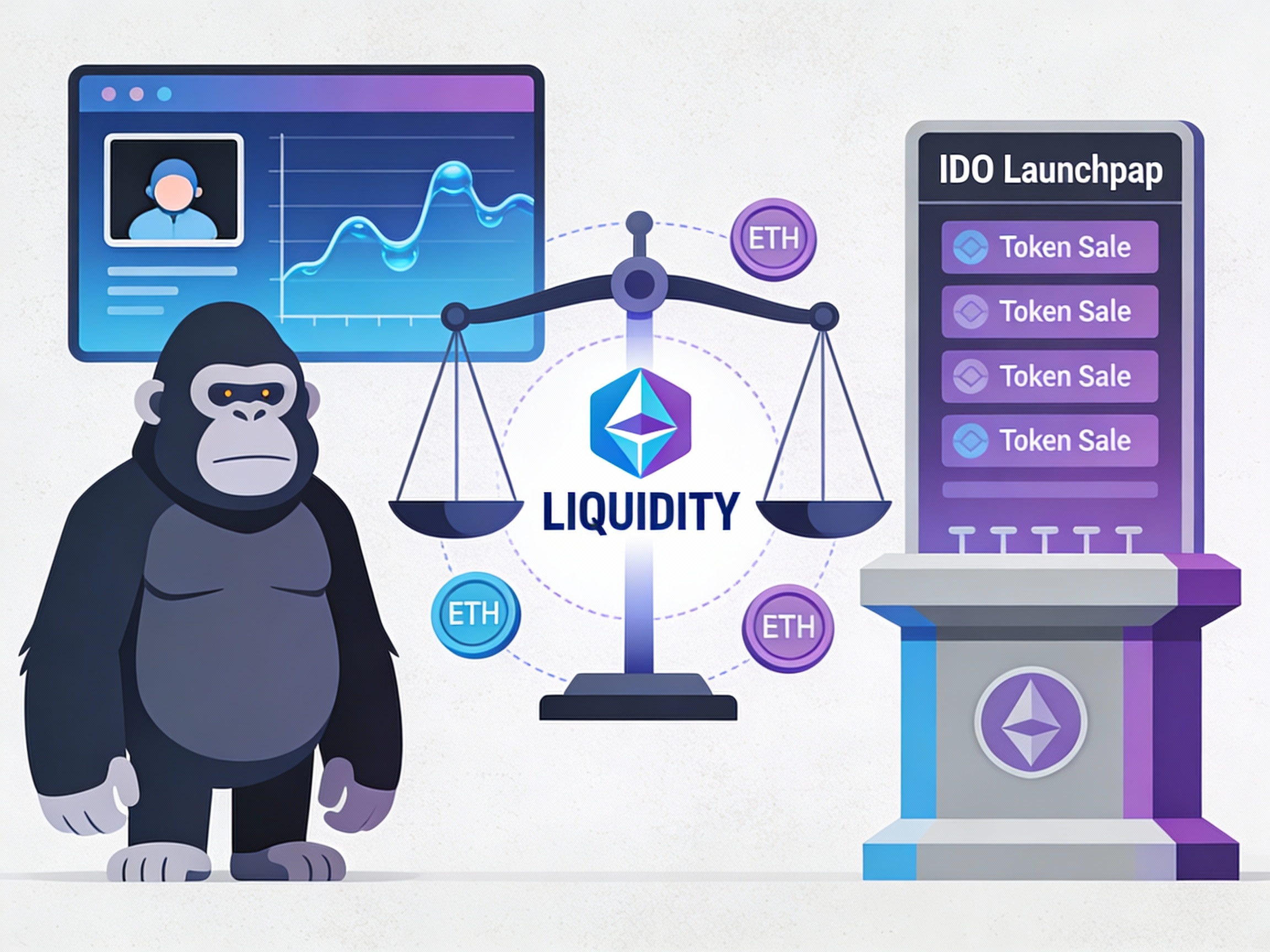
Comparing Ape.Store Liquidity to Classic IDO Launchpads: Why the Memecoin Model is Winning in 2025
Table of Contents Introduction: The Evolution From IDO to Memecoin Launchpads 2020: IDO launchpads dominated (Polkastarter, Binance Launchpad) Projects raised $100k-$10M through carefully vetted, weeks-long fundraising processes 2023-2025: Memecoin launchpads emerged (Pump.fun, Ape.Store) Projects launch tokens in 5 minutes, anyone can participate, fair-launch model dominates The question: Which model is better? And why is Ape.Store’s approach winning? The…
-
Bridge Security: Houdini Integration Case Study and the Game Theory of Incentive Design
Table of Contents Introduction: Privacy Bridges as New Attack Surface By 2025, cross-chain bridge hacks had surpassed $2.8 billion in cumulative losses. As bridges became more sophisticated, so did attacks against them. But there’s a paradox: the more privacy a bridge provides, the more security challenges it creates. Traditional bridges (like Uniswap v2 liquidity pools) are…
-
Analytics Deep Dive: Reading Ape.Store Dune Dashboards to Validate Incentive Design Theory
Table of Contents Introduction: From Theory to On-Chain Verification Two Ape.Store knowledge base articles make powerful claims about how the platform is designed differently from competitors: First claim: Fee-splits keep creators motivated indefinitely through ongoing revenue alignment, not one-time extraction Second claim: Meme coins function as on-chain incentive design experiments, and Ape.Store’s mechanism choices produce better outcomes…
-
How Ape.Store Builds on Pump.fun’s Bonding Curve Model: Innovation Beyond the Fundamentals
Table of Contents Introduction: Standing on the Shoulders of Giants In 2024, Pump.fun launched on Solana and fundamentally democratized token creation. By January 2025, over 6 million tokens had launched on the platform, generating $700 million in protocol revenue. The platform proved one essential truth: frictionless token launch mechanisms enable mainstream adoption. Pump.fun didn’t invent bonding…
-
Sustainability of Fee-Split Models for Token Creators: How Ongoing Revenue Aligns Incentives
Table of Contents Introduction: From One-Time Extraction to Sustainable Revenue Traditional token launch model: Timeline to creator extraction: 2-8 weeks Fee-split model: Timeline to creator revenue: Immediate. Duration: Indefinite (if project viable). The difference isn’t just financial structure. It’s psychological alignment. One model incentivizes extraction then abandonment. The other incentivizes maintenance and community building. This fundamental…
-
Meme Coins as On-Chain Experiments in Incentive Design: What Failed Jokes Teach Us About Market Mechanisms
Table of Contents Introduction: Meme Coins as Unintentional Laboratories Meme coins are not typically described as “experiments in incentive design.” Yet that’s precisely what they are. Traditional economics occurred in universities and corporate boardrooms. Incentive design happened in abstract theory, tested in textbooks, maybe implemented in controlled corporate environments. Meme coins inverted this: they conducted…
-
The Role of Social Layers (Farcaster, Telegram) in DeFi Adoption: Community Infrastructure as Competitive Advantage
Table of Contents Introduction: Why Social Layers Are Critical DeFi Infrastructure Traditional DeFi narrative focuses on smart contracts, liquidity pools, and token economics. This framing is technically accurate but strategically incomplete. In reality, DeFi adoption is driven by social infrastructure—the platforms where communities form, information flows, and decisions get made. Consider: This reveals a fundamental…
-
Holder Distribution Metrics: How to Spot Whales Early
Table of Contents Introduction: Why Whale Detection Matters for Token Evaluation In cryptocurrency markets, whale movements move billions in value. A single large transaction can cause 30-300% price swings in volatile meme coins. Understanding who holds large positions and what their behavior signals is essential for: By 2025, professional whale tracking tools (Nansen, Arkham, ArbitrageScanner)…