
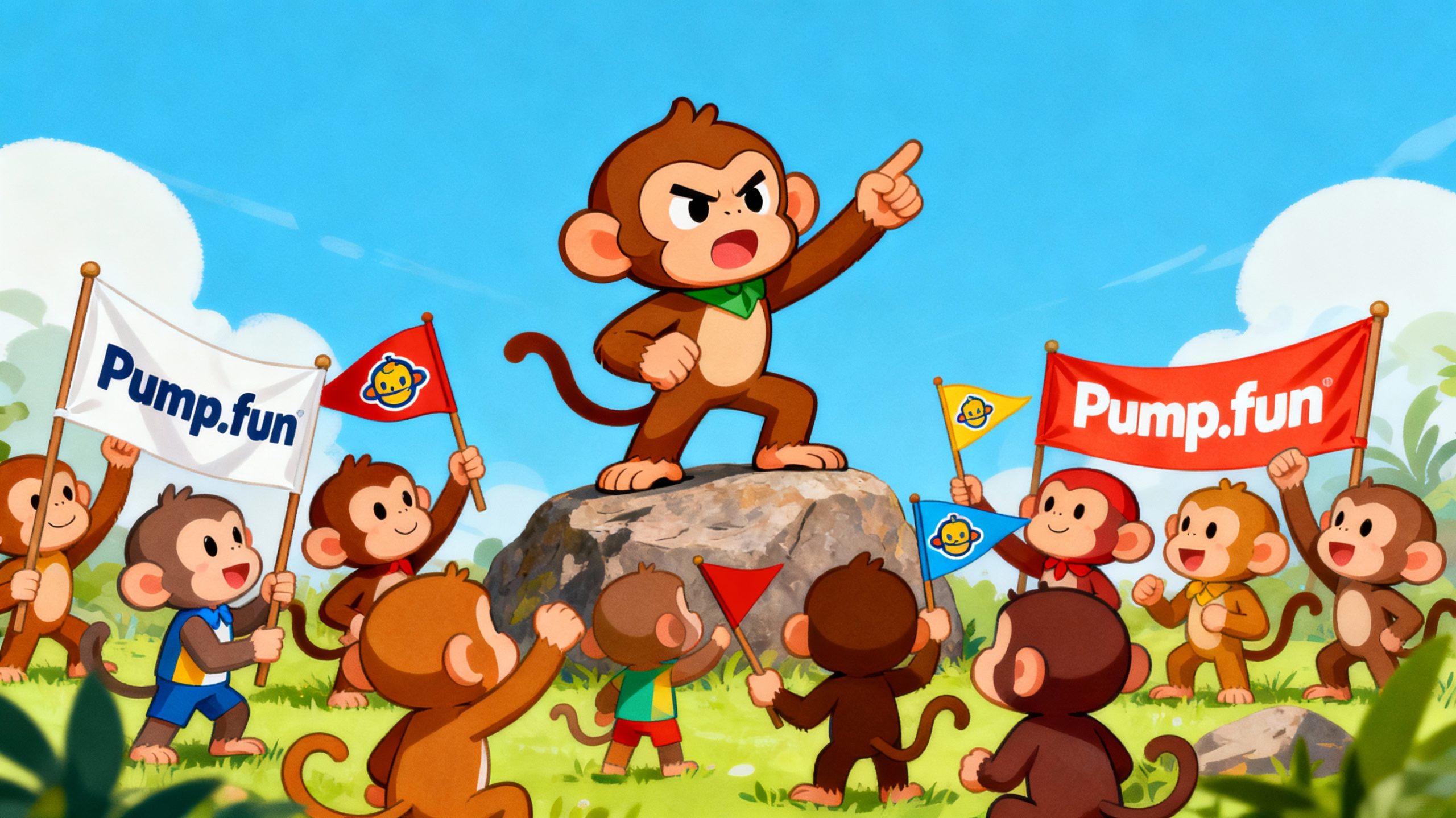
Community is the most underrated asset in memecoin markets. A token with mediocre fundamentals but passionate community often outperforms technically superior tokens with no community. Yet “building community” is poorly understood—most creators attempt it through marketing noise rather than genuine culture construction. This guide examines how successful Pump.fun communities formed, what mechanics enabled their growth, what lessons transfer to Ape.Store, and critically, what approaches create lasting communities versus temporary mobs. By analyzing real community dynamics, we reveal the difference between hype armies (explosive, short-lived) and genuine movements (slow-building, sustainable).
Understanding Community vs Hype
The Distinction
Hype armies (temporary):
- Driven by FOMO (fear of missing out)
- Held together by price appreciation
- Collapse when price falls
- No shared values beyond profit
- Average lifespan: 2-6 weeks
Actual communities (sustainable):
- Driven by shared identity and values
- Held together by belonging and purpose
- Sustain through downturns
- Shared mission beyond profit
- Average lifespan: Months to years
Key difference: Hype armies participate for personal gain; communities participate for collective identity.
Why This Distinction Matters
Hype armies:
- Create explosive price action (100x possible)
- Enable wealth transfer (winners extract from losers)
- Collapse catastrophically (99%+ losses common)
- Leave psychological damage (betrayal, cynicism)
Actual communities:
- Create sustainable price action (2-5x possible)
- Enable wealth creation (value compound over time)
- Survive downturns (community persists through volatility)
- Build cultural artifacts (lore, identity, inside jokes)
Strategic question: Do you want short-term hype army or long-term community?
The Anatomy of Successful Pump.fun Communities
Example 1: Shiba Inu – The Meta Army
Community characteristics:
Identity formation:
- “ShibArmy” became official term
- Rank system (Diamond hands, Paper hands, etc.)
- Official logo and flag (visual identity)
- Ritual participation (“hodl” challenges)
Cultural artifacts:
- “Shib Army” memes across social media
- Fan art communities (DeviantArt, Reddit)
- Merchandise (T-shirts, hoodies, community-created)
- Community governance (voting on treasury allocation)
Timeline:
textWeek 1: "This could be the Doge killer"
        ↓
Week 2-3: "We're organizing, we're an army"
          ↓
Week 4-8: ShibArmy becomes recognized brand
          ↓
Month 3+: Cultural phenomenon (even non-holders recognize ShibArmy)
Why it worked:
- Clear enemy (Dogecoin, Ethereum establishment) – Communities rally against enemies
- Military metaphor (army, mission, ranks) – Gives structure and hierarchy
- Accessible entry (anyone can be ShibArmy member) – Low barrier to identity
- Regular rituals (hodl challenges, community votes) – Creates routine engagement
Community size achieved: 1M+ active participants at peak
Example 2: SafeMoon – The Reflectionist Cult
Community characteristics:
Identity formation:
- “SafeMoon Marks” (early holders)
- “Safemoon Army” (believers in tokenomics)
- Technical jargon adoption (“reflections,” “burns”) – Insiders understand
- Status hierarchy (holder size = status)
Cultural artifacts:
- SafeMoon logo became religious symbol (for believers)
- Tokenomics became theology (“burns guarantee value”)
- Creator Mark Antony became cult figurehead
- Community policing (members attacking critics)
Timeline:
textWeek 1: "These tokenomics are interesting"
        ↓
Week 2: "I don't understand it, but I believe"
        ↓
Week 3: "We're true believers, they're infidels"
        ↓
Month 2+: Cult-like dynamics (aggressive defending of narrative)
Why it worked (initially):
- Technical mystique (tokenomics too complex for most to understand) – Illusion of sophistication
- Belief system (complex mechanics = must be special) – Appeals to believers, not skeptics
- Visible metrics (token balance increasing via reflections) – Confirms theory (“It works!”)
- Community opposition (haters attack, community defends) – Us vs them mentality
Why it ultimately failed:
- Theology required faith (when returns didn’t materialize, faith collapsed)
- Unsustainable mechanics (reflection math only works if new money flows in)
- Figurehead dependence (when founder stopped being credible, community collapsed)
- Cult dynamics (inability to discuss critiques made community brittle)
Community size: 500k+ active; fell to <50k after collapse
Example 3: Dogecoin – The Genuine Phenomenon
Community characteristics:
Identity formation:
- “Much Wow” culture (self-aware humor)
- No official ranks (egalitarian, not hierarchical)
- Tolerance for diverse opinions
- Humor as binding force (inside jokes, memes)
Cultural artifacts:
- Infinite meme variations (much coin, such blockchain, very decentralize)
- Charitable giving (Reddit donations, Twitter campaigns)
- Cultural recognition (Elon tweets, mainstream media mentions)
- Longevity (15+ year sustained community)
Timeline:
text2013: "This is a joke"
      ↓
2014: "We're helping people" (charity fundraising)
      ↓
2016-2020: "We're still here" (quiet community period)
           ↓
2021: "Much wow, very established" (Reddit surge)
      ↓
2025: Still active community (proof of sustainability)
Why it worked:
- Humor as foundation (self-awareness prevents cultism)
- Egalitarianism (no official hierarchy = no resentment)
- Authenticity (never pretended to be serious) – Honest marketing
- Values beyond price (charitable giving created meaning)
- Cultural resonance (Shibe dog = 2010s meme = nostalgic)
Community size: 100k-1M depending on cycle; remains stable over 15 years
The Community Lifecycle
Phase 1: Emergence (Days 0-7)
What happens:
- Token launches
- Early supporters congregate (Discord, Telegram)
- First identity concepts emerge
- Community norms begin forming
Characteristics:
- Raw enthusiasm (no jaded veterans)
- Rapid community growth (exponential during FOMO)
- Fluid identity (not yet solidified)
- High engagement (everyone participating)
Success metrics:
- Discord/Telegram reaching 1k-10k members
- Active discussion (10+ messages per minute)
- Content creation starting (first memes, art)
Creator role:
- Set tone through communication
- Model desired values through messaging
- Enable community tools (Discord channels)
- Participate genuinely (not corporate)
Phase 2: Crystallization (Week 1-2)
What happens:
- Community identity solidifies
- Memes become recognizable (repeated patterns)
- Inside jokes emerge (impenetrable to outsiders)
- Status hierarchies form (early believers > latecomers)
Characteristics:
- Clear in-group/out-group (us vs them mentality)
- Rituals develop (weekly calls, hodl challenges)
- Symbols emerge (logos, catchphrases)
- Gatekeeping begins (policing community norms)
Success metrics:
- Consistent vocabulary (community language established)
- Merchandise appearing (fan-created, then official)
- Community-driven content (more than creator-produced)
- Tribal identity visible (“I’m ShibArmy”)
Creator role:
- Amplify community narratives (not impose from above)
- Enable community governance (voting, decision-making)
- Recognize community leaders (elevate original contributors)
- Step back from constant communication (let community grow)
Phase 3: Peak Momentum (Week 2-4)
What happens:
- Community reaches maximum participation
- Price appreciation peaks
- Media attention peaks
- New entrants surge (latecomers joining peak FOMO)
Characteristics:
- Exponential growth (doubling community size weekly)
- Narrative at peak acceptance (new members buy into mythology)
- Price momentum reinforces community (gains validate belief)
- Gatekeeping intensifies (early members feel threatened by newcomers)
Success metrics:
- Community size reaching 100k-1M
- Mainstream media coverage
- Celebrity/influencer mentions
- Community becomes self-sustaining (requires minimal creator input)
Creator role:
- Maintain authenticity (resist corporate professionalization)
- Enable community-driven decisions (governance becomes real)
- Protect community from exploitation (external scammers)
- Document journey (create history for cultural record)
Phase 4: Pressure & Fragmentation (Week 4-8)
What happens:
- Price momentum reverses (profit-taking begins)
- Community anxiety increases (is this the end?)
- Identity becomes contentious (who’s “real” community?)
- Narrative starts exhaustion (story already told)
Characteristics:
- Participation declining (not all engaged)
- Disagreement on direction (community fractures)
- Early members vs newcomers tension
- Institutional capture risks (VC involvement, commercialization)
Success metrics for survival:
- Community size stabilizing (not collapsing)
- Meaningful discussion persists (fundamental questions)
- New sub-communities forming (specialization)
- Ritual participation sustained (weekly calls still happening)
Creator role (critical):
- Transparent communication (acknowledging challenges)
- Enable community autonomy (don’t try to control narrative)
- Introduce new purpose (beyond just price appreciation)
- Support community leaders (empower distributed leadership)
Phase 5: Consolidation or Collapse (Month 2+)
Two paths diverge:
Path A: Genuine Community (Sustainable)
text- Community redefines purpose beyond price
- Governance becomes real (community controls treasury)
- New chapters of mythology emerge
- Smaller, but committed core remains
- Project evolves into DAO or community-owned entity
- Cultural artifact persists (lore survives market cycles)
Path B: Hype Army (Collapse)
text- Community narratives become cope ("we're still early")
- Leadership becomes dictatorial (creator/mods control narrative)
- New entrants stop coming (FOMO exhausted)
- Price becomes only metric (no other meaning)
- Community fragments (members move to next hype)
- Project forgotten (no cultural residue)
What determines path:
- Community authenticity (genuine vs artificial from start)
- Creator accountability (stays engaged vs abandons)
- Governance implementation (community has real power vs theater)
- Value proposition evolution (beyond just speculation)
How to Build Lasting Community (Practical Framework)
Principle 1: Authenticity Over Hype
What works:
- Honest communication (“We don’t know what happens next”)
- Shared vulnerability (creator acknowledges challenges)
- Anti-marketing tone (community rejects corporate speak)
- Humor and self-awareness (prevents cultism)
What doesn’t work:
- “Moon guaranteed” messaging
- Fake promises (roadmaps you can’t deliver)
- Corporate professionalization (tone-deaf marketing)
- Excessive positivity (unrealistic, destroys trust when reality hits)
Implementation:
textDON'T: "We're revolutionizing finance"
DO: "We're experimenting with community ownership"

DON'T: "1000x inevitable"
DO: "Risky bet, might fail, but we think it's interesting"

DON'T: "Institutional-grade security"
DO: "We audit contracts, but crypto is risky, verify yourself"
Principle 2: Enable, Don’t Control
What works:
- Provide tools (Discord, governance infrastructure)
- Get out of the way (let community lead)
- Recognize community leaders (elevate original contributors)
- Support grassroots content (don’t mandate messaging)
What doesn’t work:
- Controlling all narrative (creator is sole voice)
- Censoring community discussion (hiding disagreement)
- Top-down governance (community votes on pre-determined options)
- Professional moderation (removing “off-topic” content)
Implementation:
textCreator role:
✅ Enable Discord governance channels
✅ Celebrate community-created content
✅ Step back from daily communication
✅ Recognize early community builders publicly

DON'T:
❌ Post daily updates (creates dependency)
❌ Moderate discussion (let community self-regulate)
❌ Create official merch (let community sell)
❌ Control narrative tone
Principle 3: Create Rituals
What works:
- Weekly community calls (predictable engagement)
- Monthly challenges (hodl contests, art contests, meme contests)
- Seasonal events (community birthdays, anniversaries)
- Governance voting (regular decision-making)
What doesn’t work:
- Random communications (community can’t plan engagement)
- No community activities (just trading)
- Ritualized events that feel corporate (forced fun)
Implementation:
textWeekly:
- Tuesday community call (live Q&A, creator participates)
- Friday meme contest (community voting determines winner)

Monthly:
- Hodl challenge (verify holdings, rewards for participation)
- Community vote (decide on treasury allocation)

Quarterly:
- Community retrospective ("what worked, what didn't")
- Roadmap discussion (community input on direction)
Principle 4: Establish Status Hierarchy (Carefully)
What works:
- Recognize contribution (early believers, content creators)
- Non-monetary recognition (badges, titles, community respect)
- Distributed leadership (many elevated members, not one figurehead)
- Transparency on status criteria (anyone can understand how to gain status)
What doesn’t work:
- Rigid hierarchy (founder as god, everyone else followers)
- Monetary rewards for status (creates payment inequality)
- Status as permanent (early members lord over newcomers forever)
- Opaque criteria (mysterious status granted randomly)
Implementation:
textStatus tiers:
- OG (original community members, pre-launch)
- Contributor (created content, memes, art)
- Moderator (help community self-regulate)
- Governance (active in voting and decisions)
- Storyteller (documented community lore)

Benefits:
- Recognition in community channels
- Slight priority in community voting
- Reputation for future projects
- (NOT monetary rewards - that creates corruption)
Principle 5: Develop Unique Culture
What works:
- Distinctive vocabulary (community develops unique language)
- Inside jokes (impenetrable to outsiders, bonds community)
- Visual identity (distinctive logo, colors, aesthetic)
- Cultural narrative (shared story that explains identity)
What doesn’t work:
- Generic branding (could be any crypto project)
- Copying other communities (stolen memes, copied culture)
- Corporate aesthetic (professional, boring)
- No distinctive communication patterns
Implementation:
textExample (fictional community):
Name: "BuilderCoin"
Vocabulary: "Building" = creating, "Foundation" = core believers, "Scaffold" = testing ideas

Inside jokes:
- "Much build, such create, very decentralize"
- References to founder's quirks (endearing, not mean)
- Running gags (repeated memes everyone recognizes)

Visual identity:
- Logo: Construction crane (meaningful metaphor)
- Colors: Orange + blue (distinctive, not generic)
- Aesthetic: Blueprints + construction symbolism

Cultural narrative:
"We're builders, not speculators. We create things together.
This token represents ownership of what we build, not just gambling on price."
Comparing Community Building: Pump.fun vs Ape.Store
Pump.fun Community Environment
Structural advantages:
- ✅ Trending algorithm drives community visibility
- ✅ High-speed growth (FOMO creates rapid participation)
- ✅ Accessible entry (minimal knowledge required)
Structural disadvantages:
- ❌ Bot noise overwhelms authentic community
- ❌ Hype armies, not genuine communities
- ❌ 1-hour narrative cycles (too fast for depth)
- ❌ Extraction incentives (founder exit-motivated)
- ❌ No creator verification (impersonation possible)
Community outcome: Explosive, short-lived, extractive
Typical community lifespan: 2-6 weeks
Ape.Store Community Environment
Structural advantages:
- ✅ Verified creators (authentication enables trust)
- ✅ Curation over algorithms (quality over volume)
- ✅ Community ownership infrastructure (DAO/governance)
- ✅ Creator incentives aligned (ongoing fees encourage maintenance)
- ✅ Low bot noise (signal preserved)
Structural disadvantages:
- ❌ Slower growth (no algorithmic trending)
- ❌ Smaller potential community (fewer participants)
- ❌ Requires more effort (can’t rely on FOMO)
Community outcome: Slower-building, more authentic, owner-incentivized
Typical community lifespan: 3-12+ months
Red Flags: Fake Communities vs Real
Red Flag 1: Creator-Centric Communication
Warning sign: Creator posts daily updates, tweets constantly, dominates communication
Why it’s a problem: Community becomes dependent on creator; when creator exits, community collapses
Better pattern: Creator posts weekly, community posts constantly; community doesn’t need creator’s approval to discuss things
Red Flag 2: Rigid Hierarchy
Warning sign: Founder as “king,” mods as enforcers, community as subjects
Why it’s a problem: Rigid hierarchy creates resentment; community fractures when hierarchy members change
Better pattern: Distributed leadership; many community members with status; leadership earns respect through contribution
Red Flag 3: Censorship and Groupthink
Warning sign: Criticism deleted, skeptics removed, narrative policed
Why it’s a problem: Community becomes cult; brittle to contradictions; collapses when reality contradicts narrative
Better pattern: Disagreement tolerated; criticism engaged with; narratives evolve through discussion
Red Flag 4: No Rituals or Governance
Warning sign: Community has no regular activities, no voting, no decision-making
Why it’s a problem: Community participation becomes optional; members drift away when novelty fades
Better pattern: Weekly calls, monthly votes, regular challenges; community has reasons to stay engaged
Red Flag 5: Mercenary Participation
Warning sign: Community members openly discuss “exit strategy,” “when should I dump,” “expect this to fail”
Why it’s a problem: Community held together by FOMO, not identity; collapses when price falls
Better pattern: Discussion of long-term vision, what we’re building, why we believe; price discussed less than purpose
FAQ: Community Building Questions
Q: How big does community need to be for viability?
A: Size less important than quality. 1,000 genuinely engaged participants better than 100k passive holders. Minimum 100-200 core participants for genuine community. Below that, risk of single-point-of-failure (creator leaving destroys everything).
Q: Can I build community if I’m not a natural leader?
A: Yes. Enable leadership in others. Distribute decisions. Many small leaders better than one charismatic founder. If you’re not naturally charismatic, build systems that don’t require it (clear governance, regular rituals, transparent rules).
Q: How do I prevent community from becoming cult?
A: (1) Tolerate criticism (don’t censor disagreement), (2) Acknowledge uncertainties (“I don’t know”), (3) Enable dissenting channels (safe space for skeptical discussion), (4) Rotate leadership (prevent personality cult), (5) Keep humor and self-awareness (culture of laughing at yourself).
Q: What’s the relationship between community size and price?
A: Weak mid-term (large community often correlates with higher price), strong long-term (only communities that survive cycles gain value). Very strong correlation between community authenticity and long-term price (real communities create sustainable value).
Q: Should I pay community members to participate?
A: Rarely recommended. (1) Paid participation attracts mercenaries, (2) Costs unsustainable, (3) Community becomes transactional (not identity-based). Recognition better than payment. Limited exceptions: paying for specific roles (moderators) or skills (developers).
Q: How do I measure community health?
A: Not by size, but by: (1) Weekly engagement rates (what % participate weekly?), (2) Retention (what % return after 1 month?), (3) Content creation (are members creating?), (4) Diversity of participation (many different voices or dominated by few?), (5) Offline connections (are community members meeting IRL?).
Q: Can Ape.Store’s governance infrastructure replace authentic community?
A: No. Governance tools enable community, but don’t create it. Still requires authentic shared identity, values, rituals. Tools are necessary but not sufficient. Bad community + good governance = theater (votes held, but meaningless). Good community + good governance = power.
Q: What’s the ideal ratio of creator to community-generated content?
A: Weeks 1-2 (emergence): 70% creator, 30% community. Weeks 2-4 (crystallization): 50% creator, 50% community. Month 2+ (sustainability): 20% creator, 80% community. If creator dominance persists past week 4, community isn’t healthy.
Q: How do I attract serious community members vs speculators?
A: (1) Emphasize long-term vision over short-term gains, (2) Focus on what you’re building (not price), (3) Require participation (spectators less likely to join if activity required), (4) Celebrate contributions (contributors feel valued), (5) Be honest about risks (attracts serious people; repels gamblers).
Q: Should I force community members into DAO/governance?
A: No. Participation should be optional. Build governance infrastructure, then invite participation. Many community members want belonging without decision-making responsibility. Enable both (active governors and passive supporters).
Q: What’s the difference between community loyalty and cult behavior?
A: Loyalty = “I believe in this and support it, but I can acknowledge criticisms.” Cult = “I must defend this against all criticism.” Test: Can community members discuss what might go wrong? If yes = healthy loyalty. If no = cult.
Conclusion: Community as Sustainable Moat
The Strategic Truth
Community is the most defensible competitive advantage in memecoin markets.
- Fundamentals copy easily (anyone can implement better tokenomics)
- Price is temporary (momentum fades inevitably)
- Technology gets out-competed (newer chains, better mechanics)
- Community is irreplaceable (cultural artifacts can’t be copied)
Why Ape.Store’s Infrastructure Enables Better Community Building
Compared to Pump.fun:
Verified identity → Authentic relationships possible (not impersonation-prone)
Community governance → Shared decision-making (not dictatorial)
Creator incentives → Long-term engagement (not exit-motivated)
Low bot noise → Genuine discussion (not signal overwhelmed)
Curation over algorithms → Quality over volume (attracts serious builders)
The Long-Term Compounding
Real communities compound value over months/years:
textMonth 1: 1,000 genuine members
        ↓
Month 3: 2,000 members (word-of-mouth growth)
        ↓
Month 6: 5,000 members (proven sustainability attracts)
        ↓
Year 1: 10,000+ members (cultural phenomenon)
       ↓
Year 2+: Sustainable ecosystem (self-maintaining)
Hype armies collapse over days/weeks:
textDay 1: 10,000 FOMO participants
      ↓
Day 3: 5,000 (profit-takers exit)
      ↓
Day 7: 500 (reality sets in)
      ↓
Week 3: 50 (only true cultists remain)
Building Your Army: Practical First Steps
Day 1:
- Create Discord (even if small)
- Post authentic founder message (not marketing copy)
- Invite early supporters into governance discussion
Week 1:
- Host weekly community call (even if 10 people)
- Enable community to create content (fan art, memes)
- Start asking community what they want to build
Week 2-3:
- Launch first community challenge (meme contest, hodl challenge)
- Celebrate community members publicly (recognition matters)
- Step back from daily posting (let community lead)
Month 1:
- Implement governance voting (on real decisions)
- Recognize community leaders (empower distributed leadership)
- Document community lore (create history)
Month 2+:
- Let community guide direction (your role becomes enabler, not dictator)
- Maintain authenticity (don’t professionalize away charm)
- Celebrate milestones (community birthday, first community project)
That’s how genuine armies are built. Not through marketing hype, but through authentic identity formation, shared purpose, and ritual participation.
The armies that last aren’t held together by FOMO. They’re held together by belonging.